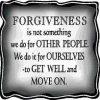
“The day a child realizes that all adults are imperfect, he becomes an adolescent; the day he forgives them, he becomes an adult; the day he forgives himself, he becomes wise.”~ Alden Nowlan
How do you really feel about your Mom? Are you experiencing a deep love and compassion for her? Or do you just feel loyalty and obligation? Are you one of those people who always want to please your Mom? Or are you filled with so much anger and resentment that you avoid them, or rebel by doing the opposite of what they taught you?
During many years as a practicing psychotherapist, I have discovered that most people have to resolve issues with their parents in order to love them unconditionally, and truly enjoy giving to them on Mother's Day as well as the rest of the year.
It was wonderful to see the clients soften and smile, as they resolved their unfinished business with their parents. For the first time they were able to accept that their parents did the best they could with the information and tools that they had, and forgive them. The clients also realized that if they wanted to blame, they would have to go way back through the many generations because they basically learned how to parent by what their folks did with them. Unfortunately, we have been passing down these dysfunctional, unloving methods of child rearing throughout our history.
The irony of it is that being a parent is much more difficult than being a psychotherapist. I, like most people, had no training in parenting. However, to become a counselor I had to study for a degree, intern for years and pass a test in order to receive a license. In my opinion, it would be very helpful to have required "Parenting Classes" in high school and college. Then more people can learn the necessary tools they need to help their children be healthy, happy and successful in the world.
I am convinced that parents basically love their children and want the best for them. I believe this because often after a client succeeded in healing their own inner child they were able to see clearly what they had done with their offspring. They sobbed deeply as they visualized their son or daughter, and said, "Please forgive me. I just did to you what was done to me. I'm so sorry. I love you. I never meant to hurt you. If I'd known better I would have treated you differently."
When the clients realized that they were not able to properly nurture their offspring because they themselves did not experience love as a child, they were able to forgive themselves. Even though the client was sad and wished it could have been different, they accepted that they could not give anyone an apple if they had never received one.
Very often, the client was saddened and frustrated because even though they wanted to heal their relationship with their children, they were unsuccessful. Their son or daughter was still harboring anger and hurts and resisted taking their parent's outreached hand.
Some clients felt terrible because they had never healed their relationship with their mother or father when they were living. It was wonderful to watch them let go of their guilt as I assisted them in their healing and forgiving process with their deceased parents.
It is never too late, and never too soon to constructively release the negative feelings you have towards your mom. Then you may be able to give your mom the best and most valuable gift for Mother's Day, and throughout the year--forgiveness, love, and compassion.
Helene Rothschild, MS, MA, MFT, is a Marriage, Family Therapist, intuitive counselor, author, speaker, teacher and workshop facilitator. To empower people, she developed a unique process, HART: Holistic And Rapid Transformation (New Book: "All You Need Is HART! Create Love, Joy and Abundance- Now! A unique guide to Holistic And Rapid Transformation".) Her numerous educational and inspirational materials, lectures, and media appearances (including CNN) have helped millions of men, women, and children internationally to reach their personal and professional goals. Helene's mission is to help people to "love themselves to peace", which she believes is the key to health, happiness, success, and world peace. http://www.helenerothschild.com, helene@helenerothschild.com
• • • • •
Forgiving Your Mom Before It's Too Late... Forgiving Mom by Linda Athis, ForgivingMom.com
My Mother died on Thanksgiving Night of 2006. Yet this will be a joyous holiday for me, because I chose to settle things with Mom before she died. If you haven’t done so, do it now. Whatever the history, no matter how horrible her crime, find a way to forgive. Trust me, this is a selfish act. You will be doing it for yourself. Oh, yes…it will make your Mother much happier too (big smile).
My Mom and I…what to say. Our relationship was tumultuous, competitive and sometimes felt downright mean. We were polar opposites. Yet a soft little voice warned me I’d better get my ducks in a row before her death.
She didn’t have long. It could happen right then, or six months from now. Her heart was failing. What magnificent, yet untried tool could bust through this ugly crust of mutual dislike built so meticulously in five decades?
And if I did break through, would she misunderstand? Make fun of me? Assume I was admitting I was wrong and she right? Would she see my open armor and take advantage with a verbal jab?
Even more frightening, would she suddenly assume I agreed with her on politics…that I’m ready to rejoin her religion?
This task was like tatting. Highly delicate. One bad move and the beautiful lace is forever scarred. My Mother was a formidable, opinionated woman.
I began in small steps. I visited more often, always bringing a nice treat (one of her weaknesses…sweets). Disarmed by this, she would fix me my favorite childhood meal, grilled tuna fish sandwiches. Or we’d sip glass after glass of tap water and she’d talk about books she’d read, parties she’d attended, gossip from her volunteer job. Whenever politics or religion came up, I nimbly diverted her train of thought with a funny story or joke. This took a lot of work initially, but she finally realized I had unbuckled my holster…and let it fall to the ground. Her one gun did not a good gunfight make.
This process of forgiving was a selfish act. I was healing me. I was also forgiving myself for the mean things I’d said and done to my Mother. My ego stood in the way and I had to dismantle it.
1. What difference did it make if she didn’t love me like I wanted?
2. What did it matter that she loved one of my siblings so much more than me?
3. So what if she thought the way I lived my life would prevent me from going to heaven?
4. What difference did it make that I didn’t really like her personality, nor she mine?
And finally…(and I find this very amusing now)
5. What difference did it make if she still insisted weapons of mass destruction were in Iraq…even after George and his administration admitted that wasn’t the case?
In the big stare down with death, none of the above mattered anymore.
Forgiveness is the Way to Move Forward By Mel Trudgett
"Always forgive your enemies, nothing annoys them so much." - Oscar Wilde
This is a great quote and a fantastic concept. Forgiveness doesn't sound easy, especially if you feel you have been unnecessarily hurt or wronged. However, it is the ONLY way to inner peace. If you cannot forgive, you cannot let go of the negative emotions inside you. The pain will eventually rot from the inside out and will affect every area of your life.
Why let someone else's actions hurt you for any longer than they already have?
Think of this way, if someone hurt you, say 5 years ago - do you think that they have sat and wept for the past 5 years about how they wronged you? It's very unlikely, or they would have made an effort to gain your forgiveness. Let go of the past or the past will destroy YOU.
In my early 20's, I used to think of 'forgiveness' as a religious idea. Something that people involved in a religion would do for us 'sinners'. When actually forgiveness isn't about the other person - it's not about THEM being forgiven, it's about YOU being able to let go. This is the point of forgiveness. It doesn't mean that you think they are an ok person, or that you believe that they've changed or that they would never repeat their actions. All it means is that you are willing to let go of your negative energy connected to that person or event.
The more severe the wrongdoing, the more important it is for you to forgive and let go. If you truly believe that you are unable to let go of the past, I highly recommend using one of the energy healing techniques such as EFT (tapping), Emotrance, TAT or ZPoint. It will make a huge difference to your life, once you can let go of the trapped negative energy.
Do it now before it is too late. Negative energy will eventually manifest itself as severe issues such as depression, anxiety, a phobia or PTSD and even physical illness.
This person has already destroyed your past - are you going to let them hurt your future? The choice is yours.
Mel Trudgett is a self development expert and the owner of Healing That Feeling. Her unique self development program has helped people from all over the world to easily overcome their stress, phobias, anger, depression, trauma, limiting beliefs and helped them to make big changes in their lives.Visit www.healingthatfeeling.com
Forgiveness: Letting Go of Grudges and Bitterness MayoClinic.com
When someone you care about hurts you, you can hold onto anger, resentment and thoughts of revenge - or embrace forgiveness and move forward.
Nearly everyone has been hurt by the actions or words of another. Perhaps your mother criticized your parenting skills or your partner had an affair. These wounds can leave you with lasting feelings of anger, bitterness and even vengeance — but if you don't practice forgiveness, you may be the one who pays most dearly. By embracing forgiveness, you embrace peace, hope, gratitude and joy. Here, Katherine Piderman, Ph.D., staff chaplain at Mayo Clinic, Rochester, Minn., discusses forgiveness and how it can lead you down the path of physical, emotional and spiritual well-being.
What is forgiveness?
Generally, forgiveness is a decision to let go of resentment and thoughts of revenge. The act that hurt or offended you may always remain a part of your life, but forgiveness can lessen its grip on you and help you focus on other, positive parts of your life. Forgiveness can even lead to feelings of understanding,
empathy and compassion for the one who hurt you.
Forgiveness doesn't mean that you deny the other person's responsibility for hurting you, and it doesn't minimize or justify the wrong. You can forgive the person without excusing the act. Forgiveness brings a kind of peace that helps you go on with life.
What are the benefits of forgiving someone?
Letting go of grudges and bitterness makes way for compassion, kindness and peace. Forgiveness can lead to:
Healthier relationships
Greater spiritual and psychological well-being
Less stress and hostility
Lower blood pressure
Fewer symptoms of depression, anxiety and chronic pain
Lower risk of alcohol and substance abuse
Why is it so easy to hold a grudge?
When you're hurt by someone you love and trust, you may become angry, sad or confused. If you dwell on hurtful events or situations, grudges filled with resentment, vengeance and hostility may take root. If you allow negative feelings to crowd out positive feelings, you may find yourself swallowed up by your own bitterness or sense of injustice.
What are the effects of holding a grudge?
If you're unforgiving, you may pay the price repeatedly by bringing anger and bitterness into every relationship and new experience. Your life may become so wrapped up in the wrong that you can't enjoy the present. You may become depressed or anxious. You may feel that your life lacks meaning or purpose, or that you're at odds with your spiritual beliefs. You may lose valuable and enriching connectedness with others.
How do I reach a state of forgiveness?
Forgiveness is a commitment to a process of change. A way to begin is by recognizing the value of forgiveness and its importance in your life at a given time. Then reflect on the facts of the situation, how you've reacted, and how this combination has affected your life, health and well-being. When you're ready, actively choose to forgive the person who's offended you. Move away from your role as victim and release the control and power the offending person and situation have had in your life. As you let go of grudges, you'll no longer define your life by how you've been hurt. You may even find compassion and understanding.
Understanding forgiveness and using it in your life to move forward with relationships and career is a daunting task when you're feeling betrayed and hurt. It is well known that exercise is a powerful antidote to depression. However, try exercising when you're depressed. It's not that easy. Similarly, it's pretty well known that forgiveness is good for you and releases pent up creative energy. However, doing the work to forgive is not that easy, even when you understand why you need to forgive. Here are some points to keep in mind when thinking about how to forgive:
Be compassionate with yourself.
Sometimes what stops people from forgiving is the pressure to do so in the first place. Have compassion with yourself when you are having difficulty forgiving. In many faith traditions there is a pressure to forgive and those who cannot forgive often think they have failed. In reality, it may not be time for you to forgive, and if you force yourself to do something that you are not ready to do; you may be adding to the problem and creating another layer of resentment. Simply being willing to think about forgiveness may be your first step, and it may be enough until you arrive at clarity about what forgiveness is, and what it is not. Try not to put a schedule on your forgiveness.
Be clear about what forgiveness is and what it is not.
Sometimes what stops people from forgiving is that idea that they will be condoning the behavior that hurt them. You may have to remind yourself frequently that to forgive is not the same as saying "It's ok that you did that." Try seeing this perspective: You're releasing the hurt feelings for your own sake, for the sake of your children and loved ones, because when you do release them, more of your joy and creativity can be present. Besides, living with un-forgiveness ends up being more stressful and punishing to ourselves than to the one who offended us.
Have healthy boundaries.
Sometimes what stops people from forgiving is the thought that the person they are forgiving will do what they did all over again. That could be so. Try this perspective: Forgiveness does not mean letting people walk all over you. Instead, it is possible to forgive someone, and kindly choose not to hang out with them again. That may take great strength to do, because sometimes we very much want to hang out with them and we believe they will change because we have forgiven them.
Forget about remorse and revenge.
Sometimes what stops people from forgiving is a desire to get even, or a hope that the person being forgiven will show some remorse. Sometimes this is simply impossible because the person may have passed away, or the grudge may be held against something like life itself. Revenge is not always possible, and it is always not advisable. Getting revenge gives a mild relief but frequently results in a feeling of guilt for having stooped to the very kind of actions that hurt.
I hope these ideas will contribute to your willingness to consider forgiveness as a pathway to freedom. The sheer difficulty of doing the work lessens as we educate ourselves about why it is we should forgive and how to do it.
Edward Viljoen is co-author (with Chris Michaels) of Practice the Presence, an interactive daily journal and Spirit is Calling. He is co-author (with Joyce Duffala) of Seeing Good At Work available at http://www.steppingstonesbookstore.org
Loretta LaRoche - Emotional Baggage and Forgivess
Loretta is an acclaimed speaker, author and international stress management and humor consultant.
How to Forgive Yourself Five Steps to Forgiving Yourself with Dr. Phil Oprah.com
Dr. Phil says that you have the power to be miserable the rest of your life. Or, you can say, "I'm going to give myself the permission to heal." You have to decide whether you're going to define a new relationship with yourself and remove the roadblocks that are blocking your path to living your best life.
Step One: Reopen your heart and mind again.
When you are faced with terrible pain, your heart and mind slam shut. Opening yourself up again is a choice in terms of how you contextualize what happened to you. It allows you to say, "I am willing to consider that there is another way to adjust."
Step Two: Choose to love yourself again.
Guilt is a wastebasket term that we use to cover everything negative and bad. One defining factor of guilt is that we commit the ultimate betrayal: abandoning ourselves. If you can't love yourself, you won't be able to heal yourself.
Step Three: Confront and demystify your guilt.
Most people have the misconception that our depth of grief reflects the level of love for the person we've lost. It's not a betrayal of your loved one to go past the pain and deal with it in a different way. Demystifying the guilt means understanding the fear.
Step Four: Give yourself permission to heal.
Part of forgiving yourself is understanding that you don't have to be punished. Give yourself permission to let go of the pain. If you have a wounded heart, you can't give good and pure love to anyone else.
Step Five: Actively create new relationships.
If you've been unable to forgive yourself, it's possible that you've been holding yourself up to unrealistic expectations. You need to decide whether you want to continue living in pain. Once you've made that decision, you need to create a new relationship with yourself.
The Confidence to Let Go of the Past and Our Suffering By Catherine Pratt, Life-With-Confidence.com

Every single one of us on this planet suffers in some way. Doesn’t matter if you’re rich or poor, male or female, white, black or purple. As my friend tells me, “it’s part of our contract in being born. We have to suffer.” Some people seem to experience much greater personal tragedies than others but we all have painful issues we have to live through. It is part of life on this planet.
Suffering can happen in thousands of different ways and whether it takes place in the form of abuse (physical or mental), people cheating on us, loved ones dying on us, parents not loving us enough, car accidents or even losing our jobs, it doesn’t really matter in that we’re all affected by it at some point or at many points during our lives. Suffering is whatever causes us great emotional upheaval and we all have to go through it.
The difference is how we deal with our suffering and whether we're able to move on to emotional healing. We can deal with our pain or we can let it slowly destroy us. An important part of gaining confidence is to “let go” of our suffering and have the courage to move on and be the whole person we know we can be.
There’s two main steps in achieving the confidence to move past suffering.
“To forgive is to set a prisoner free and discover that the prisoner was you.”
- Lewis B. Smedes
"We must develop and maintain the capacity to forgive. He who is devoid of the power to forgive is devoid of the power to love. There is some good in the worst of us and some evil in the best of us."
- Martin Luther King, Jr.
“The weak can never forgive. Forgiveness is the attribute of the strong.”
- Mahatma Gandhi
Self-Forgiveness
Oprah Radio
Letting go of a grudge you're holding against someone can be difficult, but letting go of a grudge you're holding against yourself can be even more so, Dr. Robin says.
Maybe you're upset with yourself because of the way you've spent your money or because you chose not to have children. No matter the reason, Dr. Robin says you should let go of the grudge and forgive yourself.
"Self-forgiveness is one of the most essential building blocks to leading and building your best life," she says. "If you want to infuse your life with power, the thing you need for the journey is self-forgiveness [and] self-acceptance."
While you may still be upset with some of the choices you've made in the past, by allowing for self-forgiveness, Dr. Robin says you can heal and lead the rest of your life with confidence.
"You can decide that today is a new day and you're not going to use any more of your energy, not one more moment of your life, living in regret," she says. "You're going to let this moment be what it is … a new moment for you to create a new life and a new moment to create a new destiny."
How to Forgive Your Parents Oprah Radio
Have your parents betrayed you or hurt you so badly that you aren't sure you can ever forgive them? While some people have very good reasons to harbor a grudge against their parents, Rabbi Shmuley talks about why it's important to truly consider forgiving them.
Each of us has an innate desire to be close to our parents, Rabbi Shmuley says. "We all seek to attach ourselves to our source," he says. "Because of this, harboring anger against our parents is particularly damaging and can cause you to become cynical, lose trust and also show your kids the bad example that being close to your parents is not essential."
Rabbi Shmuley shares reasons why you should find it in your heart to forgive your parents:
You want to love them and be close to them.
They apologized.
You don't want to be angry any more.
You are a forgiving person or you believe that it's the moral thing to do.
Steps to Forgiveness
By Shana Aborn, Ladies Home Journal
Learn how to let go of grudges.
If forgiveness is divine, then most of us are less than saintly. But forgiving those who hurt you can bring a sense of personal peace that we can't experience when we refuse to let go of a past slight. Besides, it's healthier. One recent study conducted by researchers at Hope College, in Holland, Michigan, showed that subjects experienced significant cardiovascular stress when they imagined revenge on people who had hurt them, but less so when they visualized forgiving their transgressors. Stanford University's Forgiveness Project, in Palo Alto, California, has found that people who try to forgive report fewer incidents of anger and physical symptoms of stress than those who don't.
Starting the Healing
Don't wait for an apology. "Often we get very self-righteous: 'There's no way I'm going to forgive unless he says he's sorry,'" says Mariah Burton Nelson, author of The Unburdened Heart: Five Keys to Forgiveness and Freedom (HarperSanFrancisco, 2000). "But when we do that, we could end up clinging to anger for years, often at our own expense. We're leaving our well-being in the hands of someone else." So start right now by recalling the facts of the incident and acknowledging your anger and hurt.
Leap! into Forgiveness: Interview with author, Dan Millman, about forgiveness. Could forgiveness be a powerful tool in creating the life you want? Healing Path
Forgiving Your Parents: Forgiving our parents is a core task of adulthood, and one of the most crucial kinds of forgiveness. Oprah
How to Forgive:Specific steps and strategies on how to forgive.